
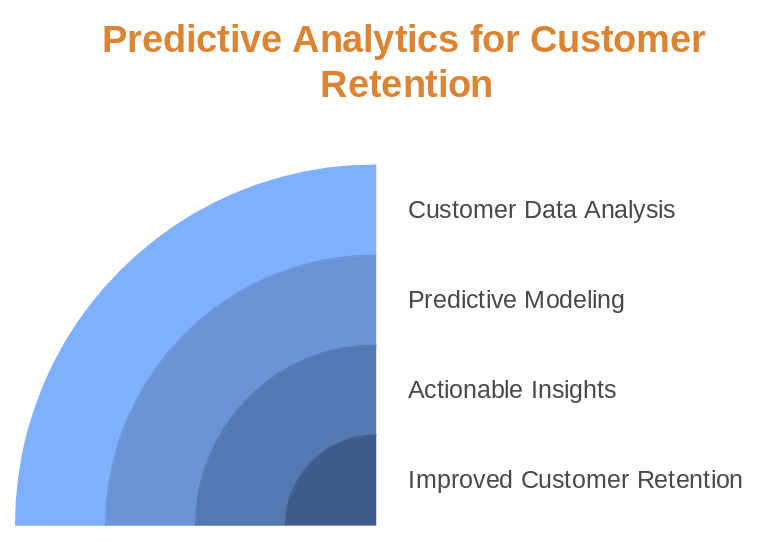
Predictive Analytics: The Key to Unlocking Customer Retention
Picture this: Your small business keeps acquiring new customers month after month, but something mysterious happens—they don’t stick around. You may think the answer is acquiring *more* customers, but what if I told you that **keeping** your current ones is more profitable and, thanks to predictive analytics, easier than ever?
In this post, we’ll dive into the wonderful world of **predictive analytics** and how you can use it to **retain your loyal customer base**. We’ll outline how it can help your business identify customers at risk of leaving and provide actionable strategies to keep them around. By the end, you’ll have a solid game plan for implementing predictive analytics into your customer retention strategy!
What is Predictive Analytics?
Let’s start with the basics: **predictive analytics** is the science of using historical data, algorithms, statistics, and machine learning to **predict future outcomes**. Essentially, it helps you spot patterns in customer behavior and provides insights into what they’ll do next. For small businesses, this means you can forecast which of your customers are likely to leave and why.
Predictive analytics can help you understand which behaviors lead to customer churn, improving your bottom line without having to constantly chase new customers. A study from **Harvard Business Review** found that acquiring a new customer can cost **5 to 25 times** more than retaining one. That’s a lot of Starbucks runs!
It’s like being able to read minds—except the “fortunes” of your customers are written in their online activity, purchase history, and feedback. Magic? No, just smart data!
Learn more about predictive analytics here.
Identifying Customer Churn
The first step to reigning in runaway customers is identifying **who’s at risk** of leaving. Predictive analytics makes sure no one slips through the cracks by analyzing factors like purchase history, browsing behavior, and engagement metrics.
Recognizing Churn Indicators
Your customer may not hand you a memo before deciding never to return, but their behavior does signal clues. Things like **reduced purchasing frequency**, **increased complaints**, or **low engagement** are red flags predictive models can pick up on. According to a report by **Gartner**, businesses that prioritize predictive analytics for retention see a **15-30% increase** in customer retention rates.
Practical Churn-Tracking Tips:
- Follow usage data—track patterns in how often customers engage.
- Listen to customer feedback—watch for any recurring dissatisfaction.
- Notice sudden drops in activity—this often suggests an intention to disengage.
Read more about Gartner’s findings here.
Strategies for Using Predictive Analytics in Customer Retention
Now that you can spot the escape artists, it’s time for you to use **predictive analytics** to keep those hard-earned customers. Let’s go over some tried and true strategies:
Quantifying and Understanding Customer Churn
First, measure your churn rate. This is the percentage of customers who don’t make repeat purchases or who cancel services. By using predictive models, you can determine what percentage of your customer base is at risk. Typically, if your current churn rate is over **5-7%**, that’s a red flag!
Pro tip: Use tools like **HubSpot** or **Google Analytics** to monitor customer behavior. These tools help you spot changes in churn-prone customers over time and provide actionable insights.
Identifying Churn Triggers
What is it that pushes your customers over the edge? Predictive analytics can be applied to discern **specific behaviors** and **triggers** that often lead to churn. Maybe it’s delayed shipping, overwhelming product selections, or unfriendly customer service. Once you know the triggers, you can mitigate them proactively.
Check out HubSpot’s churn analysis for more strategies.
Predicting Future Churn
This is where the fortune-telling happens. By integrating predictive analytics, you can forecast which customers will leave so that you can **take action** before it’s too late. If you know that a particular customer typically abandons ship after 90 days of inactivity, you can set up automated “We Miss You” reminders in advance.
Engagement Triggers and Personalization
You don’t want to be that clingy person sending out generic “COME BACK!!” messages. Instead, use predictive analytics to identify precise **engagement triggers** like frequently viewed product categories or wishlist additions. These insights can guide your pre-emptive actions like sending **personalized retention offers** or reminders at the right time.
Customer Lifecycle Segmentation
At the heart of it all is being able to segment your customers by lifecycle stage and behavior. By tailoring your retention efforts to these different groups, you send **the right message at the right time**. According to **Salesforce**, personalized strategies increase revenue by **5-15%** while reducing marketing costs by 10-30%.
Example: A new customer may respond well to a thank-you discount, while a longer-term customer might be more engaged by exclusive loyalty rewards. It’s like sending the right invitation to the right party—it just works!
Implementing Predictive Analytics
Now that we’ve covered the strategies, let’s talk about **getting predictive analytics up and running** at your small business.
Data Collection and Analysis
Start by collecting **key customer data** types like purchase history, browsing data, and demographic info. Every click on your website or purchase interaction leaves valuable crumbs that can predict future behavior. Use tools like **Google Analytics** or **CRMs** like **Zoho** to gather and categorize this data in meaningful ways.
Building Predictive Models
Once you’ve stocked your data vault, it’s time to build predictive models. Don’t worry, you don’t need to hire a data scientist just yet. Many tools like **IBM Watson**, **Tableau**, or **Supermetrics** offer intuitive solutions for small businesses to create predictive models without needing a PhD in statistics.
Supermetrics free trial for small businesses.
Hyper-Personalization
Ready for next-level engagement? Use predictive analytics to take **personalization to new heights**. By understanding and anticipating individual needs, you can offer customized promotions, recommend products based on past behavior, and elevate your customer experience across the board.
Case Study: Hyper-Personlization Success With Predictive Analytics
**Every Man Jack**, a men’s grooming company, implemented hyper-personalized retention campaigns using predictive analytics. By analyzing their customers’ buying habits, they were able to predict when customers would need refills and sent timely email reminders. The result? A **25% increase in repeat purchases!**
Benefits of Predictive Analytics for Small Businesses
If we haven’t won you over by now, here are some hard-hitting benefits small businesses can gain from implementing predictive analytics strategies:
- **Reducing customer churn:** Keep revenue steady by retaining loyal customers.
- **Increasing customer lifetime value:** Happy customers stay longer and spend more.
- **Personalized marketing:** Tailor retention strategies to individuals, improving ROI.
- **Data-driven decisions:** No guesswork; just smart, calculated moves.
Learn about customer retention strategies with Salesforce.
Bringing It All Together
**Customer retention is your secret weapon**. Predictive analytics makes maintaining a loyal base simple, actionable, and successful for small businesses. From forecasting customer churn to personalizing experiences, the tools of predictive analytics are no longer just for the “big dogs.” They’re available for you too, and once implemented, they can change the trajectory of your business for the better.
Ready to make customer retention a priority? With predictive analytics, you no longer have to guess about who may leave. Instead, get ahead of the game with **data-driven insights** and personalized retention strategies.
Call-to-Action: Start implementing predictive analytics today—try a free tool like **Google Analytics** or consult with predictive platforms like **HubSpot**, and watch your customer retention soar.