
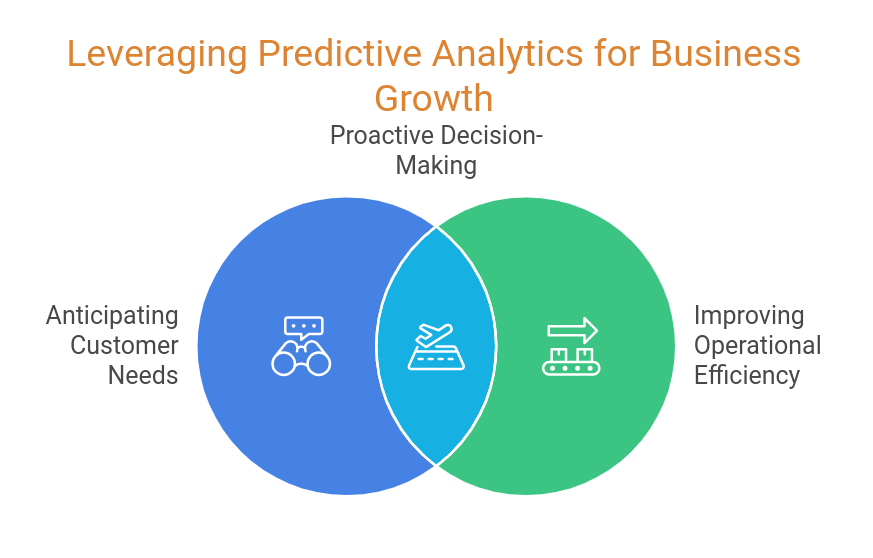
In today’s data-driven world, predictive analytics is no longer a luxury reserved for large corporations. Small businesses are increasingly leveraging this powerful tool to anticipate customer needs, improve operational efficiency, and gain a competitive edge. By analyzing historical data and identifying patterns, predictive analytics enables businesses to make proactive decisions that drive growth and profitability.
In this article, we’ll explore the key benefits, applications, and steps for implementing predictive analytics in small businesses. Whether you’re looking to enhance customer personalisation or optimise your inventory, this guide will provide actionable insights tailored to your needs.
Understanding Predictive Analytics
At its core, predictive analytics involves using data, statistical algorithms, and machine learning to forecast future outcomes based on historical data. Unlike traditional data analysis, which focuses on understanding past events, predictive analytics is forward-looking, enabling businesses to anticipate trends and behaviors before they occur.
For instance, instead of merely analyzing which products sold well last quarter, predictive analytics can identify which products are likely to sell next quarter and why. This proactive approach is what sets predictive analytics apart, making it invaluable for small businesses aiming to stay ahead of the curve.
“Predictive analytics transforms data into actionable insights, empowering businesses to make smarter, faster decisions.” – Gartner
Key Differences Between Traditional Analysis and Predictive Analytics
- Traditional Analysis: Focuses on understanding past performance.
- Predictive Analytics: Forecasts future trends and behaviors.
- Proactive Decision-Making: Enables businesses to act on insights before issues arise.
Key Applications for Small Businesses
Customer Engagement and Personalisation
Predictive analytics can revolutionize customer engagement by analyzing browsing habits, purchase history, and social media interactions to deliver personalised recommendations. For example, a small e-commerce store can use predictive models to suggest products a customer is likely to buy, increasing both engagement and satisfaction.
Personalised experiences are no longer optional—they’re expected. According to Salesforce, 76% of consumers expect companies to understand their needs and preferences. By leveraging predictive analytics, small businesses can meet these expectations and foster long-term loyalty.
Supply Chain Optimisation and Inventory Management
Managing inventory is a perennial challenge for small businesses. Predictive analytics can help by analyzing past sales data, seasonal trends, and external factors like promotions to optimise inventory levels. This ensures you avoid stockouts while minimizing excess inventory.
For instance, a boutique clothing store could use predictive analytics to forecast demand for specific items during the holiday season, ensuring they stock just the right amount. Tools like Tableau and Power BI make it easier than ever to implement such solutions.
Fraud Detection and Risk Management
Predictive analytics isn’t just about growth—it’s also about protection. By identifying unusual patterns in transaction data, small businesses can detect and prevent fraudulent activities. For example, a small online retailer could flag suspicious orders that deviate from typical customer behavior.
Fraud detection tools like SAS Analytics integrate predictive models to safeguard businesses from financial losses and reputational damage.
Implementing Predictive Analytics
Cost-Effective Implementation
Many small businesses worry about the cost of implementing predictive analytics. However, with cloud-based solutions like Google Analytics and IBM Watson Studio, you can start small and scale up as needed. These platforms offer user-friendly interfaces that make it easy to build and test predictive models without requiring extensive technical expertise.
Data Preparation and Model Selection
High-quality data is the foundation of any successful predictive analytics initiative. Start by identifying relevant data sources, cleaning the data to remove inaccuracies, and handling missing values. Once your data is ready, choose a predictive model that aligns with your goals, such as regression for forecasting or clustering for customer segmentation.
Training and Integration
After selecting a model, it’s essential to train it using historical data. This involves feeding the model data to identify patterns and refine its accuracy. Once trained, integrate the model into your business workflows, such as your CRM or inventory management system, to automate decision-making.
Success Stories and Case Studies
Consider the example of Homespun Boutique, a small fashion retailer that used predictive analytics to optimise its inventory. By analyzing past sales and seasonal trends, XYZ reduced excess stock by 30% and increased revenue by 20% during peak seasons.
Similarly, Tech Haven, a small electronics store, leveraged predictive analytics to personalise email marketing campaigns. The result? A 25% increase in click-through rates and a 15% boost in sales.
Overcoming Challenges
While predictive analytics offers immense potential, small businesses often face challenges such as data security, technology integration, and staff training. To address these issues:
- Invest in secure, cloud-based platforms to protect sensitive data.
- Partner with analytics experts to ensure seamless technology integration.
- Provide training to employees to build a data-driven culture.
Future Trends and Integrations
The future of predictive analytics lies in its integration with artificial intelligence (AI) and the Internet of Things (IoT). These technologies enable even more precise predictions by incorporating real-time data from connected devices. For example, IoT sensors in a retail store can provide real-time insights into customer behavior, enhancing the accuracy of predictive models.
As these technologies evolve, small businesses that adopt predictive analytics will become more customer-centric, efficient, and agile, positioning themselves for long-term success.
Conclusion
Predictive analytics is a game-changer for small businesses, offering tools to anticipate customer needs, optimise operations, and mitigate risks. By starting small and leveraging cost-effective solutions, even businesses with limited resources can harness the power of predictive analytics.
Don’t wait—start exploring predictive analytics today to stay ahead of the competition and deliver exceptional value to your customers.
Ready to take the next step? Check out our comprehensive guide on predictive analytics or explore our customer personalisation strategies to dive deeper into actionable insights.
FAQs
How does predictive analytics help anticipate customer needs?
By analyzing historical data such as purchase history and browsing behavior, predictive analytics identifies patterns that indicate future customer preferences.
What types of data are needed for predictive analytics?
You’ll need high-quality data from sources like CRM systems, sales records, and customer feedback. Clean, structured data is essential for accurate predictions.
Can small businesses afford predictive analytics?
Yes! Affordable, cloud-based platforms like Google Analytics and IBM Watson Studio make it accessible for businesses of all sizes.