
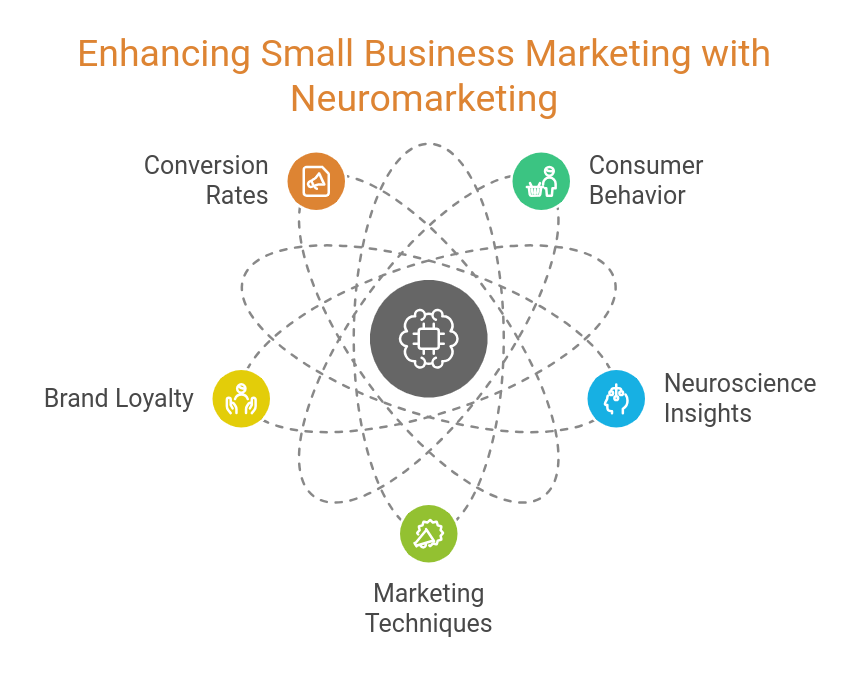
Neuromarketing is the intersection of neuroscience, psychology, and marketing, offering a unique lens to understand consumer behavior. By tapping into the brain’s subconscious processes, businesses can craft marketing strategies that resonate deeply with their audience, leading to improved conversions.
What is Neuromarketing?
Neuromarketing is the study of how the brain responds to marketing stimuli, using tools like EEG and fMRI to measure brain activity. This data reveals subconscious drivers behind consumer decisions, offering insights into what motivates purchases.
By understanding these drivers, marketers can tailor their campaigns to align with the emotional and cognitive triggers of their audience. This approach goes beyond traditional marketing by tapping into the brain’s decision-making processes.
For a deeper dive into neuromarketing technologies, check out Neuroscience Marketing.
Key Neuromarketing Techniques
Emotional Appeal
Emotions play a pivotal role in decision-making. Crafting marketing messages that evoke emotions like joy, fear, or confidence can create a lasting impression. For example, a heartfelt story about your brand’s journey can forge a strong emotional connection.
“People will forget what you said, but they will never forget how you made them feel.” – Maya Angelou
Visual Impact
The brain processes images 60,000 times faster than text. High-quality visuals, such as product images and video demonstrations, can instantly capture attention and influence purchase decisions. Consider using infographics or explainer videos to maximise engagement.
Learn more about the power of visuals in marketing from Canva.
The Paradox of Choice: Hick’s Law
Too many choices can overwhelm consumers, leading to decision fatigue. Simplify your offerings to make decision-making easier and faster. For example, instead of offering 10 similar products, highlight your top 3 bestsellers.
Dual-Coding Theory and Mental Imagery
Allan Paivio’s dual-coding theory suggests that combining verbal and visual elements enhances memory retention. Use captions with images or videos to create a more immersive experience for your audience.
Advanced Techniques for Conversion Optimisation
Social Validation
Humans are social creatures, and we look to others for validation. Display customer reviews, testimonials, and social proof prominently on your website to build trust and credibility. For instance, showcasing a 5-star rating can significantly boost conversions.
Check out our guide on How to Use Social Proof in Marketing.
Scarcity and FOMO
Scarcity and the fear of missing out (FOMO) are powerful psychological triggers. Limited-time offers or low-stock alerts can create urgency, prompting immediate action. For example, “Only 2 items left in stock!” can drive quick purchases.
Anchoring Effect
The anchoring effect uses a reference point to influence decisions. For example, listing a premium product at $100 and a standard one at $50 makes the latter seem like a bargain. This pricing strategy can nudge consumers toward higher perceived value.
The Baader-Meinhof Phenomenon
Also known as the frequency illusion, this phenomenon occurs when people notice something repeatedly after encountering it once. Retargeting ads capitalise on this by keeping your brand top-of-mind, increasing the likelihood of conversions.
Applying Neuromarketing in eCommerce
For eCommerce businesses, neuromarketing can enhance product descriptions, optimise user experiences, and improve customer satisfaction. By understanding subconscious preferences, you can tailor your offerings to meet customer needs effectively.
For example, using reward-based messaging like “Earn points with every purchase!” taps into the brain’s reward system, encouraging repeat business. Learn more about eCommerce optimisation in our eCommerce Marketing Strategies guide.
Behavioral Economics and Conversion Rate Optimisation
Behavioral economics explores how psychological factors influence economic decisions. By understanding cognitive biases, you can design marketing strategies that align with consumer behavior, such as using decoy pricing to nudge choices.
For a detailed exploration of behavioral economics, visit Behavioral Economics.
Conclusion
Neuromarketing offers a powerful toolkit for small business owners to understand and influence consumer behavior. By applying techniques like emotional appeal, visual impact, and scarcity, you can create marketing campaigns that resonate and convert.
Start experimenting with these strategies today, and don’t forget to measure your results to refine your approach. For more insights, check out our Marketing Psychology Tips.
Ready to take your marketing to the next level? Contact us today for a free consultation!